
Bathroom renovation: the complete guide (stages, deadlines)
What are the stages in a bathroom renovation? Where do I start? How long does it take? We tell you everything!
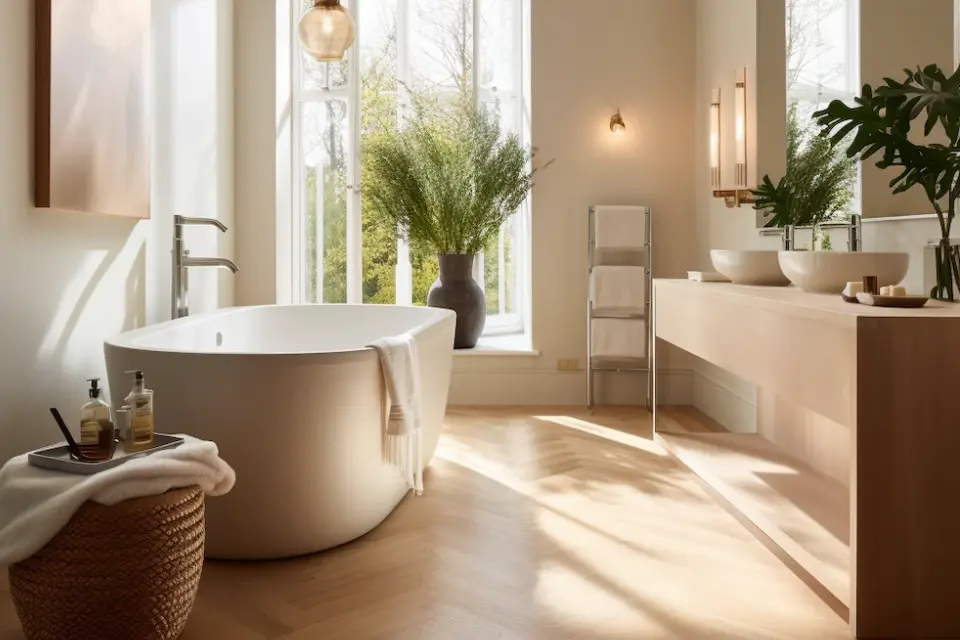
Renovating your bathroom: a smart idea
Rethinking your bathroom can We can help you transform your home and add real value to it. A modern, practical shower room not only enhances your comfort, it also allows you to increase the price (or rent) of your property. Here's a complete guide to help you with this wonderful project.
Key points to remember:
- The budget for a complete overhaul generally ranges from between 700 and 2000 euros per square metre (see the guide des coûts en 2026).
- This range varies considerably depending on the quality of the equipment chosenthe size of the room and the scope of the work envisaged.
- Beyond the aesthetic aspect, renovation allows you to optimise the layout of your space and reduce your water and electricity bills.
- It is essential to call on the expertise of certified professionals to guarantee the quality of the work.This is particularly true for sanitary and electrical installations, which require specific expertise.
The essential steps for a successful bathroom renovation
Renovating your bathroom is an ambitious project that requires a great deal of organisation. Here's the route to follow:
1. Design and planning
Before taking the plunge, take the time to think about your needs and desires. Imagine the atmosphere you want to create: a Zen atmosphere with a spacious walk-in shower or a cosy cocoon with a relaxing bath?
Draw up a realistic budget taking all aspects of the project into accountfrom materials to labour costs (use ce guide des prix 2026). Don't hesitate to consult an interior designer or a specialist company to optimise the layout and make the most of every corner of your space.
2. Selection of equipment and materials
The choice of components for your new bathroom is crucial:
- Choose materials that are moisture-resistant and easy to maintain. Sustainable options such as treated wood, natural stone or recycled ceramic tiles are particularly fashionable.
- For your sanitary fittings, opt for water-efficient models. They will enable you to reduce your environmental impact while cutting your bills.
3. Site preparation
Your work can now get under way. Here's what you need to consider at this stage of the project:
- Dismantling existing installations
- Any alterations to partitions for a new layout
- Treating damp or mould problems
- Preparing passageways for new networks (heating, ventilation, etc.)
It is strongly recommended that you call in professionals for this stage, especially if your home is old. Buildings can sometimes hold surprises in terms of structure or installations.
4. Plumbing and electrical work
This stage is essential and must be entrusted to certified experts. The standards for electrical installations in wet areas are very strict to ensure your safety.
Now is the time to install or relocate water inlets and drainsand to install the new electrical network. If you opt for a underfloor heatingIt will also be installed at this stage.
5. Installation of coverings
Once the plumbing and electrical work has been completed, the laying wall and floor coverings.
Whether you choose tiling, waxed concrete or wall panels, make sure you have the right finish. watertight installation to prevent future damp problems and ensure your bathroom lasts as long as possible. Once again, it's best to enlist the help of a professional.
6. Fitting and finishing
The final step is to install :
- Sanitary equipment (bath, shower, WC, washbasin)
- Storage units (furniture, washbasins, etc.)
- Accessories such as mirrors, towel rails or light fittings
The finishing touches are crucial to the final result. Pay particular attention to tile jointsThese details will make all the difference to the durability and aesthetic appeal of your new bathroom. These details will make all the difference to the durability and aesthetics of your new bathroom.
By following these steps and calling on the services of qualified professionals, you can be sure of a successful bathroom renovation that complies with current regulations and will provide real added value to your home.
Innovative trends to modernise your bathroom
La rénovation de salle de bain évolue constamment. Voici les concepts tendance en 2026 :
The Italian shower: elegance through simplicity
The walk-in shower is becoming an essential feature of contemporary bathrooms. Here's why:
- Because it creates an impression of space and fluidityideal for visually enlarging small rooms.
- Because its barrier-free design makes it accessible to everyoneincluding people with reduced mobility.
- Because it offers great freedom of personalisationfrom the choice of materials to the size of the tiles.
- Because maintenance is simplified thanks to the absence of hard-to-reach walls and corners.
But be careful: Successful installation requires the expertise of a professional to ensure a perfect slope and watertight seal.
Wall-hung furniture: lightness and functionality
Wall-hung furniture is growing in popularity, and for good reason: there are so many benefits to be had.
- They free up the groundmaking them easy to clean and giving the impression of space.
- Their adjustable height can be adapted to the needs of each user.
- Their sleek design fits in perfectly with today's minimalist trends.
- Despite their airy appearance, they often offer ingenious storage solutions.
Natural materials: back to basics
L’utilisation de matériaux écologiques dans nos salles de bain reflète une prise de conscience environnementale croissante. Voici quelques options prisées en 2026 :
- Treated wood : it brings warmth and authenticity to furniture and coverings. Choose local or certified species.
- Natural paints : based on lime or clay, they offer an elegant matt finish without harmful fumes.
- Natural stone : Its use reduces the carbon footprint while adding a unique touch to your bathroom.
Warning: don't forget to ensure that these materials are treated to resist moisture.
Technology for well-being
The integration of high-tech equipment is becoming increasingly common in modern bathrooms. Here are just a few of the features we're seeing more and more of:
- Intelligent taps : sensor-controlled or smartphone-controlled taps for optimised water management.
- Connected mirrors: Equipped with LED lighting, an anti-fog function and even an information display, they become veritable personal assistants.
- A new generation of toilets: With washing, drying and health analysis functions, they are reinventing personal hygiene.
- Intelligent heating : programmable floor systems or connected towel rails combine comfort and energy savings.
When installing connected equipment, make sure they comply with French electrical standards (230V, 50Hz) and check their compliance with regulations on the protection of personal data.
Comment optimiser votre salle de bain pour augmenter la valeur de votre bien en 2026 ?
- Choose a timeless, elegant style: Choose a range of neutral colours and sleek shapes that will appeal to a wide range of potential buyers.
- Focus on quality: Choose sustainable, environmentally-friendly materials such as porcelain stoneware or wood from sustainably managed forests.
- Incorporate high-tech features discreetly : A digital shower system or an intelligent mirror can attract technology enthusiasts without displeasing the most reluctant.
- Create an ergonomic and functional space: Optimise storage with wall units and make the most of the space by installing a walk-in shower.
- Focus on energy performance: Opt for water- and energy-efficient equipment. This is an increasingly important selling point for buyers.
In short: create a bathroom with a sober, timeless designWith soft tones, natural materials and a few discreet modern touches.
Les styles de salles de bain tendance en 2026
Your choice of bathroom style can have a major impact on the appeal and value of your home. Here are some fashionable styles to inspire you for your project:


A pure, minimalist style
This style, which is very popular in recent buildings, brings a touch of urban sophistication. It blends in perfectly with the contemporary architecture found in fast-changing districts such as the 13th arrondissement in Paris and Euratlantique in Bordeaux.
Its distinctive features are :
- Clean lines and simple geometric shapes
- A neutral colour palette (beige, grey, off-white)
- Contemporary materials such as frosted glass, brushed aluminium and micro cement
Mediterranean inspiration
This style, which is booming in France, is a response to the a growing desire for bright, friendly spaces. It is particularly suited to medium-sized bathrooms, which are common in town houses.
A Mediterranean-inspired bathroom includes:
- Warm colours and dark wood
- Accessories in geometric or floral patterns
- With a focus on conviviality and natural light
The neo-industrial style
Popular in lofts and the redevelopment of former industrial sites, this style is gaining ground in cities like Lyon and Nantes, where industrial heritage is enjoying a renaissance.
A neo-industrial bathroom is characterised by :
- The use of raw materials such as steel, solid oak and polished concrete
- Stylish exposed plumbing elements
- Deep tones and marked contrasts
The eco-responsible approach
This style reflects the growing environmental awareness in France.
An eco-responsible bathroom incorporates :
- Natural, sustainable materials (certified French wood, stone from French regions)
- Green plants and green walls
- Equipment labelled for its energy and water efficiency
Finally, the "spa at home" atmosphere
Particularly popular in upmarket residences or spacious homes, this style transforms the bathroom into a haven of peace.
To create a spa bathroom, consider :
- Noble materials (Carrara marble, Burgundy stone)
- Premium facilities (integrated hammam, therapeutic bath)
- Modular lighting and careful acoustics
Our advice: Whatever style you choose, remember to adapt it to the architecture of your property and to your local area. A style that is consistent with your surroundings can significantly increase the value of your property.
Our advice for a successful renovation
A well-executed bathroom renovation is based on a clever blend of ergonomics, design and well-being. Here are a few tips to keep in mind:
Maximise the use of space
- Adopt clever solutions such as wall-hung washbasin units to free up the floor and create a feeling of fluidity.
- For small surfaces, opt for a walk-in showerThe perfect combination of elegance and space-saving design.
- Exploit verticality with storage columns or high shelves. Build niches into shower enclosures for discreet, practical storage.
Choose a contemporary colour palette and style
The ambience of your bathroom will largely depend on your choice of colour and design.
- There is a trend towards clean, natural designswith a predilection for authentic materials such as wood or local stone. Don't hesitate to play with textures to add depth while maintaining visual harmony.
- Soft, neutral colours visually enhance the spaceWhile more pronounced colours can create an enveloping, intimate atmosphere.
Design the right lighting
Well thought-out lighting is crucial in a bathroom. Opt for multi-layer lighting:
- General lighting to illuminate the entire room
- Targeted lighting around the mirror for daily care
- Ambient lighting to create a relaxing atmosphere
Favour the use of LEDs for their energy efficiency and sustainability.
Ensure efficient ventilation
Adequate ventilation is essential to prevent damp and mould. Opt for a controlled mechanical ventilation system (VMC) effective. Models with a humidity sensor are particularly recommended, as they activate automatically when the humidity level rises.
Effective ventilation will extend the life of your renovated bathroom and help maintain a healthy and pleasant environment.
By following these recommendations, you can create a bathroom that is both functional and aesthetically pleasing, and that will enhance the value of your property on the market.
Regulations to follow when renovating your bathroom in France
Bathroom renovation in France is governed by precise standards, designed to guarantee the safety, quality and longevity of the installations.
Authorisations and declarations
Contrary to popular belief, renovating a bathroom may require some administrative formalities, particularly in the following cases:
- Structural modification of the building (removal of load-bearing partitions, for example). In this case, a preliminary works declaration, or even a preliminary works permit, is required. planning permissionmay be necessary.
- Conversion of an existing room : Converting a space into a bathroom can be considered a change of use of a room used as a dwelling. In this case, you will need to apply for permission.
- In the case of joint ownership : Some works (such as relocating pipes) may require the agreement of the condominium association. Inform the syndic of your plans.
- For listed buildings : Special authorisation from the Architectes des Bâtiments de France may be required for listed buildings or those located in protected areas.
If you're not sure, contact your local council. That way you can avoid any complications in the future (you never know...!).
Technical standards to be respected (electricity, plumbing)
Electrical and plumbing installations in bathrooms are subject to strict standards in France. Here's an overview of the essential rules:
Electrical standards:
- Standard NF C 15-100 governs electrical installations in wet rooms. It defines various safety levels with specific requirements.
- All electrical equipment must have an IP rating appropriate to its location. For example, in volume 1 (above the bath or shower tray), only IPX4 or higher devices are permitted.
- It is compulsory to install an additional equipotential bonding system. It connects all the metal parts of the bathroom to avoid differences in electrical potential.
- Sockets must be protected by a high-sensitivity residual current device (30 mA).
Plumbing:
- It is compulsory to use NF-certified materials for drinking water (PER pipes, copper, etc.).
- Plumbing installations must comply with standards NF EN 1717 and NF DTU 60.1These deal with protection against pollution of drinking water and the rules of the art for sanitary plumbing installations.
- The connection to the drinking water network must be equipped with a non-return device to prevent contamination.
- Drains must have a minimum slope of 1 cm per metre to ensure efficient flow.
Our recommendation: Opt for an RGE (Reconnu Garant de l'Environnement) certified renovation company in France. They'll be able to guide you through the regulatory complexities and ensure that your project is compliant from the outset. This can save you time and money in the long run, by avoiding costly modifications later on.
Bathroom renovation: crucial mistakes to avoid
Mistake No. 1: Misjudging the renovation budget
This is one of the most common and potentially costly pitfalls when renovating your bathroom.
- The reasons: Some essential items of expenditure are overlooked (surface preparation, removal of old floor coverings, electrical upgrades) and labour costs are underestimated.
- To avoid this pitfall: Find out more about average bathroom renovation rates well in advance of the project, then request a detailed estimate from a recognised renovation company. Allow a safety margin of 10 to 15% on the initial budget, and draw up an exhaustive list of all the elements required, from coverings to accessories.
Please note: In France, labour costs can account for up to 40-50% of the overall budget. Don't neglect this aspect in your estimates
Mistake no. 2: Neglecting the importance of ventilation
Underestimating ventilation is a fairly common mistake. Yet the consequences are serious: it can lead to excessive humidity, mould and health problems for occupants.
The solution: From the outset, consider installing a controlled mechanical ventilation system (single-flow CMV or double flow) to suit the size of your bathroom. Opt for a humidity-controlled model (which is activated according to the humidity level in the room).
Point of attention : In France, the RT 2012 thermal regulations impose strict standards on ventilation. Make sure your installation complies with these regulations.
Mistake no. 3: Choosing the wrong materials
When renovating a bathroom, it is essential to it is essential to choose water-repellent materials (or waterproofs) that offer excellent resistance to moisture. This is particularly crucial for floor coverings that will be frequently exposed to water.
Choose materials specifically designed for wet rooms (non-slip tiles, damp-resistant paint). and opt for durable, easy-to-maintain solutions.
Our recommendation: The large-format porcelain stoneware tiles are gaining in popularity for their robustness and ease of maintenance. They can be an excellent option for the floors and walls of your bathroom.
In conclusion: a project that deserves the expertise of qualified professionals
Renovating a bathroom is a project that requires a great deal of planning beforehand. It also involves a substantial budget. But this project can considerably improve your daily quality of life and the value of your property.
Here are two expert tips for your renovation:
- Draw up a precise and solid budget in advance (use a online simulation tool or consult a scale of average bathroom renovation costs in France)
- Don't hesitate to call on the expertise of recognised and experienced professionals in your region. Our partners can support you from the design phase through to the final completion of your project.
FAQ : Rénovation de salle de bain en 2026
Here are the steps for renovating a bathroom:
- Designing the projectby identifying your wishes and drawing up a realistic budget;
- Opt for robust materials and equipmentadapted to the French climate;
- Setting up the site removing existing installations and treating any damp problems;
- Carry out plumbing and electrical work in accordance with French standards ;
- Install the floor coverings and sanitary fittings to guarantee waterproofing and practicality.
Current trends include :
- A sleek, contemporary design in natural colours
- Italian-style showers for a flowing look and improved accessibility
- Floating furniture to save space
- The use of eco-responsible materials such as certified wood or waxed concrete
- Adopting innovative technologies (touch taps, connected mirrors)
In most cases, a simple bathroom renovation does not require authorisation in France. However, a declaration may be required if :
- You are modifying the structure of the building (removal of load-bearing partitions)
- Converting an existing room into a shower room
- You are a co-owner and modify the pipe network
- Your property is located in a protected or listed area
It's always a good idea to check with the town planning department at your local council before starting any work.
To make the most of a small bathroom in France :
- Choose a walk-in shower rather than a bath
- Opt for wall-hung furniture to free up the ground
- Incorporate large mirrors to create a feeling of space
- Choose light colours to visually enlarge the room
- Favour vertical storage and built-in niches
- Select a wall-hung toilet to save floor space
In France, materials sustainable and respectful of the environment are increasingly popular.
- Treated wood, French natural stone and porcelain stoneware tiles are very much in vogue for floor and wall coverings.
- For sanitary fittings, choose water-saving modelsThese include thermostatic showers and dual-control toilets.